
A long to-do list often raises a simple question: should you work in short, focused intervals or dedicate a longer period to one task?
The right focus timer depends on the task, your energy and the level of concentration required. Choosing the right interval can help you stay productive without feeling overwhelmed.
Matching your timer to the task can make it easier to maintain focus and work more effectively.

What Are Focus Sessions and Why Does Timer Length Matter?
A focus session is a set period of time dedicated to completing one task without unnecessary distractions.
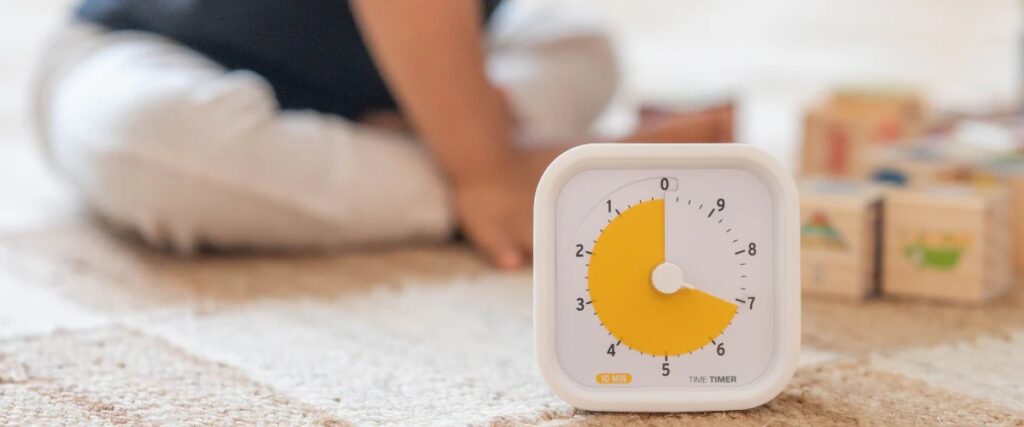
Visual timers turn the passing of time into something you can easily see. Time Timer visual timers show time as a coloured disk that gradually disappears.
According to research featured on Time Timer’s research page, visual countdown timers can support self-regulation and help people complete tasks.
They can be particularly useful for people with ADHD, autism, and other learning differences, as seeing time pass can make it easier to understand how much time remains.
Time Timer also offers the Time Timer BRAILLE for people who are visually impaired.
But which timer length is right for you? Let’s explore the options.


Short Focus Sessions: Why 25–30 Minutes Can Work Well
The Pomodoro Technique is based on 25 minutes of focused work followed by a 5-minute break.
Working in shorter intervals can help reduce mental overload. Research suggests that using the Pomodoro method may result in less fatigue and distraction compared with relying on self-regulation alone.
For focus periods similar to the Pomodoro Technique, we recommend the Time Timer MOD visual timer.
For even shorter sessions, Time Timer also offers timers designed for intervals such as five minutes.
Benefits of Short Timer Sessions
Best Use Cases
A 10-minute visual timer or a 30-minute countdown timer can be a useful choice for these shorter periods of focused work.

Long Focus Sessions: Building Deep Focus in 60–120 Minutes
Certain tasks benefit from having more time to concentrate without interruption. Longer focus sessions can be particularly useful when working on complex projects that require sustained mental effort.
Benefits of Longer Timer Sessions
When to Use Long Focus Sessions
For longer periods of focused work, a 60-minute visual timer or 120-minute timer can help you keep track of time without constantly checking the clock. For productivity-focused accessories, you can also explore the Time Timer PLUS 120 Minute Make Time Edition.


How to Choose the Right Timer Length for You
Special Considerations for Neurodivergent People
For people with ADHD, autism or other learning differences, visual timers can offer support that goes beyond traditional productivity techniques.
Time blindness can make it difficult to judge how much time has passed, which can make planning and managing tasks more challenging.
A visual countdown timer such as a Time Timer can support people with:


How Visual Timers Support Focus Sessions of Any Length
Whether you prefer short bursts of concentration or longer periods of deep work, a visual timer can make it easier to manage your time.
With a traditional timer, you need to look at the display to find out how much time is left. You may also need to remember when you started or calculate how much time has passed.
A visual timer gives you a constant, easy-to-understand view of your remaining time. As the coloured disk gradually disappears, you can see your progress without interrupting your work.
Find Your Ideal Focus Routine with Time Timer Visual Timers
Both shorter and longer focus sessions can be useful, depending on the task and your personal working style. Switching between different timer lengths can help you create a routine that works for you.
Time Timer offers a wide range of visual timers for different needs. Explore Time Timer’s full collection to find the right timer for your routine.
Whether you are concentrating on a challenging task for 15 minutes or settling into a longer period of deep work, a Time Timer visual timer can help you create a clear, dedicated block of focus time.

