
Time is one of our most valuable resources, yet it can be surprisingly difficult to manage effectively. Whether you have 15 minutes to complete a task or an afternoon to work on a project, understanding how much time is available can make a significant difference to your focus and productivity.
In the workplace, at school or while studying at home, staying on track depends on more than simply watching the clock. Maintaining concentration, avoiding distractions and working towards a clear goal all become easier when time is presented in a way that is easy to understand. A visual timer helps make the passage of time tangible, supporting deeper focus and making it easier to stay engaged with the task at hand.
The challenge is that time itself is invisible. Traditional countdown timers display numbers, but they do not always help us feel how much time is left. Visual timers offer a different approach by showing time as it passes, making time-limited tasks feel clearer, less overwhelming and easier to manage.

Why Time Can Be Difficult to Manage
Most of us rely on digital clocks, smartphone timers or alarms to keep track of time. While these tools tell us how much time has passed, they do little to help us see or experience it.
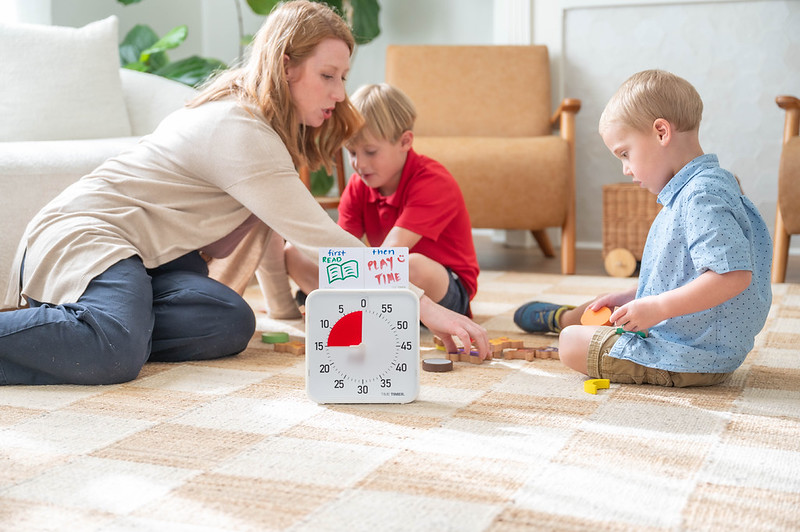
Imagine you have 30 minutes to complete a task. A digital countdown simply displays numbers, leaving your brain to estimate how quickly time is passing. As a result, it can be difficult to judge whether you are working at the right pace or if time is running out.
This constant need to mentally monitor the clock divides your attention between the task itself and keeping track of time. Over time, this can reduce focus, increase stress and make it harder to stay productive, particularly during time-limited activities.

What Is a Visual Timer?
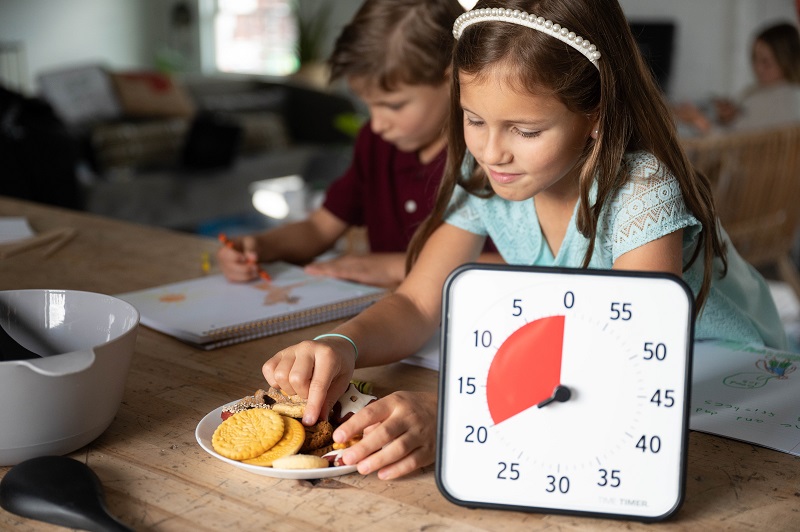
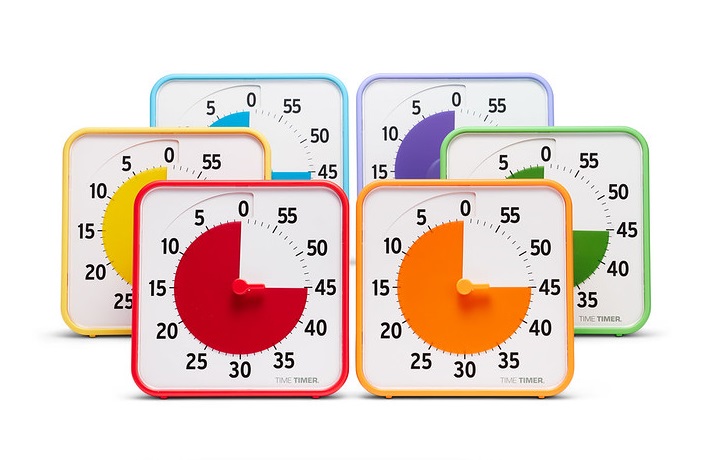
A visual timer is a time management tool that makes the passage of time easy to see. Instead of relying on numbers alone, it displays the remaining time as a coloured disc that gradually disappears. As time passes, you can instantly see how much time is left without having to calculate it yourself.
Unlike traditional timers or digital countdowns, a visual timer presents time in a way that is intuitive and easy to understand. By turning an abstract concept into a clear visual representation, it helps people stay focused, manage their time more effectively and feel more in control of time-limited tasks.


Why Visual Timers Work So Well
They Reduce Cognitive Load
Keeping track of time while concentrating on a task requires mental effort. A visual timer removes the need to constantly check the clock or calculate how much time is left, allowing you to focus more fully on the task in front of you.
They Make Time Visible
Time is an abstract concept, which can make it difficult to judge how quickly it is passing. A visual timer represents time as a coloured disc that gradually disappears, making the passage of time easy to understand at a glance. Instead of relying on numbers, you can see a clear beginning, middle and end.
They Help Reduce Time-Related Stress
Working against the clock can feel overwhelming, whether in the classroom, at work or at home. Because a visual timer clearly shows how much time remains, it can create a greater sense of control and predictability. For many people, this makes time-limited tasks feel less stressful and easier to manage.
They Support Focus and Productivity
Visual timers encourage sustained concentration by providing a constant visual reminder of the available time without becoming distracting. Rather than repeatedly checking a digital countdown, you can quickly glance at the timer and return your attention to the task. This helps reduce interruptions, maintain momentum and make productive use of the time available.


Why Visual Time Management Works
Visual timers work with the way our brains naturally understand and interpret time. Instead of requiring us to translate numbers into an estimate of how much time remains, they provide an immediate visual representation of time passing.
Our perception of time is closely linked to attention. When we are distracted or focused on multiple things at once, it becomes harder to accurately judge how much time has passed. A visual timer acts as an external reminder, reducing the need to monitor time internally and allowing more attention to be directed towards the task itself.
This makes visual timers useful in a wide range of environments, from classrooms and workplaces to situations where timing and focus are important. By making time easier to see and understand, they can support better organisation, fewer distractions and more confident time management.


Who Can Benefit from a Visual Timer?
Students and Classrooms
Visual timers are valuable tools in education because they help students understand the passing of time, stay focused on activities and prepare for transitions between tasks. In classrooms, a visual timer provides a clear and predictable way for students to understand how long they have to complete an activity, making routines easier to follow.
People with ADHD and Learning Differences
For many people with ADHD, understanding and managing time can be challenging. A visual timer helps make time more concrete by providing a constant visual reference of how much time remains. This can support planning, focus and task completion by reducing the need to rely on internal time awareness alone.
Professionals and Remote Workers
Visual timers are also useful in professional settings where focus and organisation are important. They can help structure focused work sessions, create clearer boundaries between tasks and support more effective time management during meetings or projects. For remote workers, a visual timer can provide helpful structure when managing the transition between work and personal time.
Environments Where Timing Matters
In settings where timing, concentration and clear routines are important, visual timers can provide an easy way to keep track of time without unnecessary distractions. By making time visible, they help people stay aware of deadlines, routines and important transitions.


How to Use a Visual Timer Effectively
To get the most benefit from a visual timer, start by setting a clear amount of time for a specific activity. Time blocks of 25, 30 or 60 minutes are commonly used for focused work, learning sessions or structured routines.
Place the timer where it can be easily seen without becoming a distraction. For some people, having the timer directly in front of them works best, while others prefer placing it slightly to the side so they can check the remaining time when needed.
For the best results, connect each timed session to one clear task or goal. Using a visual timer can help reduce multitasking, make transitions between activities smoother and create more consistent daily routines. Over time, regular use can support stronger time awareness and more effective time management habits.
Why Visual Timers Are Changing the Way We Manage Time
Traditional timers tell us how much time has passed, but visual timers help us understand time as it is passing. By turning time into something we can see, they make it easier to stay aware, focused and in control.
Whether you are supporting learning in the classroom, improving productivity at work or creating better routines at home, a visual timer provides a simple way to make time more manageable. Instead of constantly checking the clock or estimating how much time remains, you can focus on the activity itself.
Would you like to learn more about Time Timer and our range of visual timers? Our team is happy to help you find the right solution for your needs.